Gold vs. Gold-Plated: What Every Jewelry Lover Should Know
A friend asked us recently: "Why would I buy gold-plated when I could save up for solid gold?" It is a fair question. Growing up in Kuwait, most of us saw our mothers and grandmothers wearing 21K or 22K gold, pieces purchased from the Gold Souq that were as much financial investment as they were jewelry. That tradition runs deep here.
But the jewelry market has changed. And the answer to that question is more nuanced than you might think.
What Solid Gold Actually Means
When someone says "solid gold," they are talking about a piece made entirely from a gold alloy. Pure 24K gold is too soft for jewelry on its own (it would bend and scratch within days), so it gets mixed with other metals to create something wearable.
Here is where the karat numbers come in:
- 24K gold: 99.9% pure gold. Beautiful but impractical for daily jewelry. Too soft.
- 22K gold: 91.7% gold. Traditional in Kuwait and the Gulf. Heavy, warm color, holds value. Also scratches relatively easily.
- 18K gold: 75% gold. The international standard for fine jewelry. More durable than 22K, slightly lighter in color.
- 14K gold: 58.3% gold. Common in the US and Europe. Very durable but noticeably less yellow.
The higher the karat, the richer the gold color, but also the softer and more expensive the piece. A simple 22K gold bangle in Kuwait can easily run several hundred KWD, depending on weight and the day's gold price.
What Gold-Plated Means (and What It Does Not)
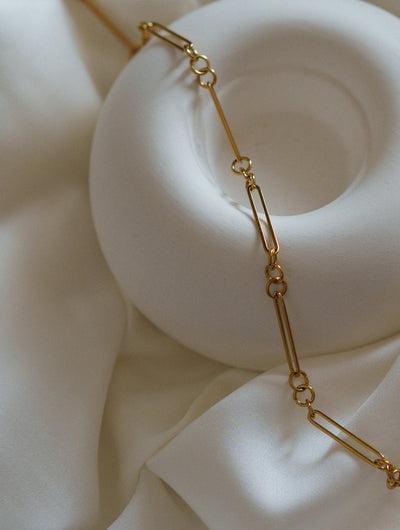
Gold-plated jewelry starts with a base metal (often brass, stainless steel, or copper) and gets coated with a thin layer of real gold through electroplating. At Marea, we use 18K gold plating, which means the gold layer has the same warm, rich tone as 18K solid gold jewelry.
What gold plating is NOT:
- It is not "fake gold." The gold layer is real gold.
- It is not the same as "gold-colored" or "gold-tone," which uses no actual gold at all.
- It is not fragile when cared for properly. We have customers wearing our pieces daily for over two years with minimal change.
The key difference is longevity. Solid gold will last generations with virtually no maintenance. Gold plating can thin over time, especially with exposure to water, chemicals, and friction. That is the tradeoff, and it is an honest one.
The Cost Comparison
The price difference between solid gold and gold-plated jewelry is not small. It is enormous. A solid gold ring at the Gold Souq in Mubarakiya can cost 10 to 20 times what a comparable 18K gold-plated piece costs. A simple solid 22K bangle can run hundreds of KWD, while our entire collection sits well under 30 KWD per piece.
That math changes the conversation completely. For the price of our Blair Ring, you could not even cover the making charge on a solid gold ring at most jewelers. But the Blair Ring on your finger? It looks just as rich, just as warm, just as polished.
Check our full collection for current pricing on every piece.
When Gold-Plated Makes More Sense
We will always respect the tradition of solid gold in Kuwaiti culture. But there are situations where gold plating is genuinely the better choice.
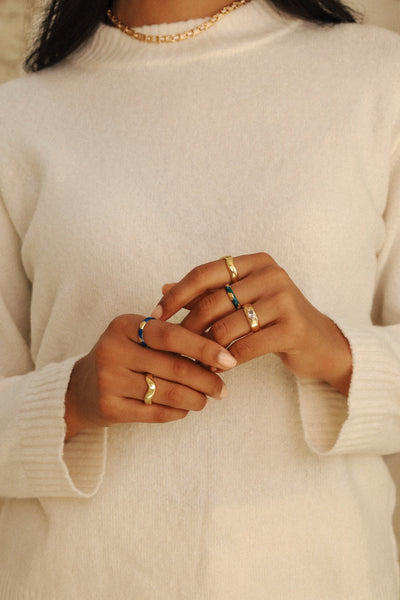
When you want variety. For the price of one solid gold ring, you could own five or six Marea pieces. Different styles for different moods, different outfits, different seasons. Our Mar Ring for casual days. The Olivia Ring when you want something with sparkle. Aria Bangles stacked on one wrist for Friday brunch at The Avenues.
When you are still figuring out your style. Spending hundreds of KWD on a solid gold piece only to realize six months later that you prefer chunkier designs? That stings. Gold-plated pieces let you experiment. Try different styles, widths, textures. Figure out what you actually reach for every morning. Then, if you want to invest in a solid gold version of your favorite style, you will know exactly what to buy.
When you travel frequently. Kuwait summers mean travel, and travel means risk. Wearing expensive solid gold through airports, on beaches, in hotel pools (we know you are not supposed to, but everyone does) adds stress. Wearing your Ray Chain Necklace on vacation? No anxiety.
When you are gifting. Buying solid gold for someone else is tricky. You might not know their exact taste, and returning gold jewelry involves resale value loss. A gold-plated gift from Marea arrives in beautiful packaging, looks stunning, and if the recipient wants to exchange for a different style, it is simple.
When Solid Gold Makes More Sense
We believe in honesty, so here is when you should absolutely go solid:
Heirloom pieces. If you are buying something to pass down to your daughter, go solid gold. The emotional and financial value compounds over generations.
Wedding and engagement jewelry. Daily-wear rings that will never come off should be solid gold. The friction and constant water exposure would thin plating faster than occasional wear.
Investment purchases. If you are buying gold as a financial store of value (common in Kuwait), solid gold is the only option. Gold-plated pieces have fashion value, not commodity value.
How to Make Gold-Plated Jewelry Last
This is where care makes all the difference. We have seen two customers buy the same piece on the same day. One still looks perfect after 18 months. The other started showing wear within three months. The difference was care habits, not the jewelry itself.
The three rules we give every customer:
- Remove before water. Showering, swimming, washing dishes. Water is the number one enemy of gold plating, and in Kuwait, even tap water has mineral content that accelerates tarnish.
- Put jewelry on last. After perfume, after moisturizer, after sunscreen. Chemicals from beauty products create a film that dulls the gold surface over time. Give everything two minutes to absorb, then put your jewelry on.
- Store it dry. Our velvet pouches are not just for looks. They protect pieces from humidity (which in Kuwait can hit 95% in August) and prevent pieces from scratching against each other.
For a deeper look at care routines, check our Jewellery Care Guide. We also wrote a climate-specific guide: How to Care for Gold-Plated Jewelry in Kuwait's Climate.
The Bottom Line
Solid gold and gold-plated jewelry serve different purposes. One is an investment. The other is an expression. You do not have to choose between them forever, and most jewelry lovers end up with both in their collection.
At Marea, we focused on 18K gold plating because we wanted to make beautiful, well-designed jewelry accessible. The kind of pieces you can wear every single day without worrying. The kind you can stack, layer, and mix. The kind that makes you feel polished walking into a meeting or picking up your kids from school.
Browse our full collection and see for yourself. Or if you want personal recommendations based on your style, message us on Instagram. We love helping people find their pieces.
Frequently Asked Questions
How long does 18K gold plating last? With proper care (removing before water, storing in a pouch, avoiding chemicals), our pieces typically maintain their finish for 1 to 3 years of regular wear. Some customers report even longer with careful habits.
Can I shower with gold-plated jewelry? We strongly recommend removing all jewelry before showering. Water, soap, and shampoo chemicals accelerate plating wear. This is the single biggest factor in how long your pieces last.
Is gold-plated jewelry safe for sensitive skin? Most people have no issues with our pieces. The 18K gold plating creates a barrier between your skin and the base metal. However, if you have a known nickel sensitivity, contact us before ordering and we can advise on specific pieces.
Can gold plating be redone? Yes, replating is possible through professional jewelers. However, at Marea's price points, most customers simply choose a new piece when the time comes, which also gives them the chance to try a different style.
Does gold-plated jewelry turn your skin green? Not typically. Skin discoloration usually comes from uncoated base metals reacting with sweat. Our 18K gold plating layer prevents this. If plating wears through in high-friction areas over time, a green mark can occasionally occur, which is harmless and washes off.
Shop the Collection